Saturday, February 12, 2011

JOUVAY AYITI, A Carnival Project by the DCFA, UWI

Jouvay Ayiti (Haiti New Day),
A project by the DCFA, UWI.
12 February 2011.
I was asked by the DCFA, to conceptualize a costume design for their jouvay Ayiti Project, for this carnival season. Below is my conceptual thoughts and instruction on functionality of the object.

THE HEAD BANGER PIECE. A DANCE OF DEFIANCE.

Conceptual Thought- When I think of Haiti, there is a long sadness drawn from a lack of activity politically and socially by Caricom, my own country and an international community that has played a role in Haiti’s turmoil. But as I grew and learned of Haiti’s inner soul, I learned of a resilience, a defiance of a culture to lay down and sleep, you learned of the metal drum art, the music festivals, the textile makers, the artists...you learned of an ingenuity to live.
There was a philosophy being implemented through the art school movements. This philosophy implanted their culture into the imagination of the world. Be it misunderstood or not their cultural product is at the tip of world attempts at understanding them. 
The head or body piece is a natural extension of the body, reaching for “that”, that makes us resilient, makes us a people, to continue in the dignity that they and we should all be, this continuation of the us is the re-embracing of our traditional craft making techniques, such as wire bending, weaving and dancing within the modernity of know.
1.      The Frame – can be built using wooden strips that will give it a flexibility in move of the body.
2.      Fabric-The Body piece will be knitted with coloured fabric. If cost factors are a concern twine can be used or strips of coloured cloth found.
3.      The Bells- the bell will be installed on the body piece, at 52”/4=13” interval on the body piece, with the bells on spikes at the top on individual spike that emanate from the body piece.
4.      The Dance- This should be a traditional dance of Haiti, that can be give modern over tones as we will be speak of tradition operating within a modernity and surviving because of adaptation.

CONCEPTUALIZATION.

GETTING THERE.

THE PERFORMANCE/DANCE OF DEFIANCE.

MEASUREMENTS

THE COLOURS.

THE IDEA OF HEIGHT, REACHING THERE TO SOMEWHERE.

THE SPIKES

THE DANCE

THE FLAG OF POWER

ANOTHER KIND OF MOVEMENT, METAL ART.

THE LETTER FROM DCFA.

Saturday, February 5, 2011

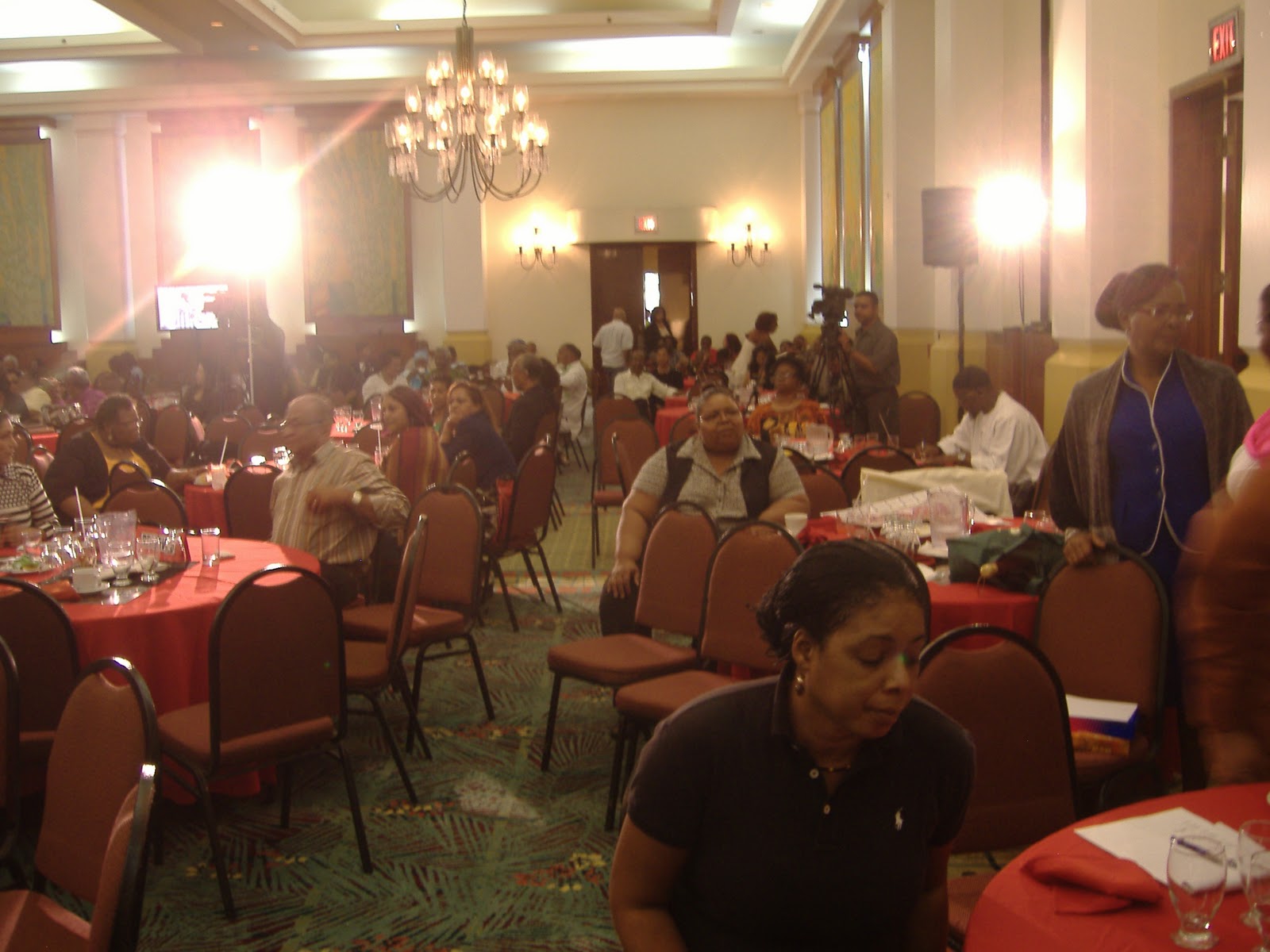
The Launch of the National Registry of Artists and Cultural Workers & 2nd Symposium- "Towards a Multiculturism Policy": A Focus on the Creative Arts


Benjai, yeah, dey love him

 SWAMPIER, SWAMPIE, SWAMPIEING.

Margret Gordon, Fashion and Education.

DE SECTOR.

 CULTURE REPRESENT.

De Same dam Ting.

Blurr the Talk, De man say it is de Ministry dat hav de problem. Yeah

The Symposium bag, Yuh Mus hav Dat. Yuh know de pad, de pencil, de brochure.

De Stage, de Screen, it Over?

People

De Question Time. Shastri had to tell dem he aint no Dr. man. Is that, yet.

TEXTILE.

REPOSITIONING DE FRAME

DEN, THERE WAS FOOD.

DAT, DEY IS WE BUEHLA.

GET FAT.

DEY HAD CAMERAS FOR LIKE DAT.

HE WOK INIT, ITIN.


READ

HE SAY, MULTICULTURALISM DEAD. I SAY DAT TO.

LISTEN

HEAR WE, WHA GO HAPPEN TO ALL DEM LYRICS, DAT WENT DOWN?

VEL LEWIS


Ministry of The Arts and Multiculturalism.
The Launch of the National Registry of Artists and Cultural Workers & 2nd Symposium.
“Towards a Multiculturalism Policy: A focus on the Creative Arts.
Friday the 4th February 2011, Crowne Plaza Hotel.
Mondiacult 82 agreement on culture, UNESCO- Culture gives man the ability to reflect apoun himself “their selves”, it is through culture that man “people” expresses themselves, becoming aware of them, recognizes his “their” incompleteness, question his “their” own achievements, seeks untiringly for new meaning and creates works through which he transcend their limitation. (Mexico).

1.      A cultural policy after all is a state apparatus to understand culture for the betterment of that regimes sustenance and longevity in the power structure of a society. Let’s not fool ourselves.
2.      Artist- live and work in an atmosphere of being blacklisted, be it imagines or not. There exist a politicization of our cultural institutions and forbid you run afoul of them, you are placed into a hole of animated suspension. This has created a culture of mediocrity and partisan artists “eating ah food”.
3.      Education- within our cultural industry there lack the intellectual understanding and imagination of culture and it’s wide ranging meaning for us to contribute to our society in REAL terms and to the development of a democratic, evolved, creative social space.
Developing the Artists- there lack a certain intellectual understanding in our artists, due to our outdated education system. This was stated at the recent Innovation Panchayat, held at the Centre for Excellence by the minister Mary King. We must look at our education system and implement a clear understanding of Ethics, Morality, History, Sociology and Philosophy.
There are examples of how poor cultural management and lack of education on how art and design projects should operate within our urban and rural landscape, has led to the bastardization of the arts and created wasteful projects-
The Oval Gallery,
The Waterfront Gallery,
Recently installed Brian Lara statue.
4.      A Cultural Policy- should in the end allow for the expression of the outsider groups to be heard. A Multicultural Policy is nothing more than an apartheid system of separate but equal. In all the 13 or T.V stations, Gayelle is the only one that have a diverse representation of our society. Far less for the myriads of radio stations, galleries, the one Museum, books etc. There must be support for the 60/40 call by ACTT.
5.      The National Museum and Art Gallery- A cultural policy must empower the National Museum and Art Gallery to foster debate and develop that critical thinking that will inevitably contribute to our innovation. The fast food policy, where shows are pelt up then down and disappears, of our Museum must be scraped, we must be able to contemplate its programmes, discuss openly and critically, that we can have an articulated and well grounded artists community that’s not bogged down in cynicism.
6.      Economics of Art and Design- Due to this lack of education I don’t really believe that our business sector understands how artists can contribute to the development of a truly innovative industry, which after oil and gas is the next viable direction. From cocoa to chocolates, from wood to design, from metal to style, from ideas to product.   

In the end our Cultural Policy should allow for critical thinking, innovation and debate to flourish amongst our artist and our people. It has been my experience that we lack an understanding of the arts, when I say that I’m an artist, or sculptor or Installation Artists. I get this puzzled look from the educated, well travelled middle class not necessarily from the working class, but that’s for another floor.
The middle class ignorance and their position as technocrats and bureaucrats make me unintelligible to their limited understanding of how art should operate in our society and you’re suddenly dismissed to the underground where a lot of us do our work. Many well meaning projects are lost in journals and left in studios and in the minds of really cool artist.   

This was presented to the Ministry and was taken by the rappatuers.  


The question lies in what will come of this. Due date to Parliament I was told in hush tones is APRIL.........We will have to see, if they will publish the "THEIR"/OUR concerns.


DEN DEY WAS DE BARRON, SWEET YEAH FOR SO.

IN ALL AH NICE TRY, BY DE MINISTRY OF ARTS AND MULITCULTURISM. LIKE VEL LEWIS SAY -

"WE DON'T SEE ANYONE HERE AS A TROUBLE MAKER"

LATER.

The Capetown Chronicles 28th Nov.-17th Dec. 2006


Looking back at these pictures of the installation, which was held at The Museum Of the City of Port of Spain, Fort San Andreas, South Quay. Trinidad and Tobago.

You tend to think of the things that I could have done, should have done. Yuh beat up on yourself.

 I'm realizing the gut impact of the installation, the raw impetus of getting it done and doing it. I really terrorized the space. On returning we had to be careful on how we dismantled the work, as not to cause to much damage.

I will like to think that is something the National Museum and artists will have to take into consideration, When implementing installations. We will need assistance in setting up and taking down our work. As not to create to much stress on these old architectural structures.


On returning from Capetown, where the work started and was first shown. It told the story of death. The death of activism in a community that was just ten years out of the apartheid system. One of the first things I did when I arrived was to sit in the library and immerse myself in the cultural history of South Africa.

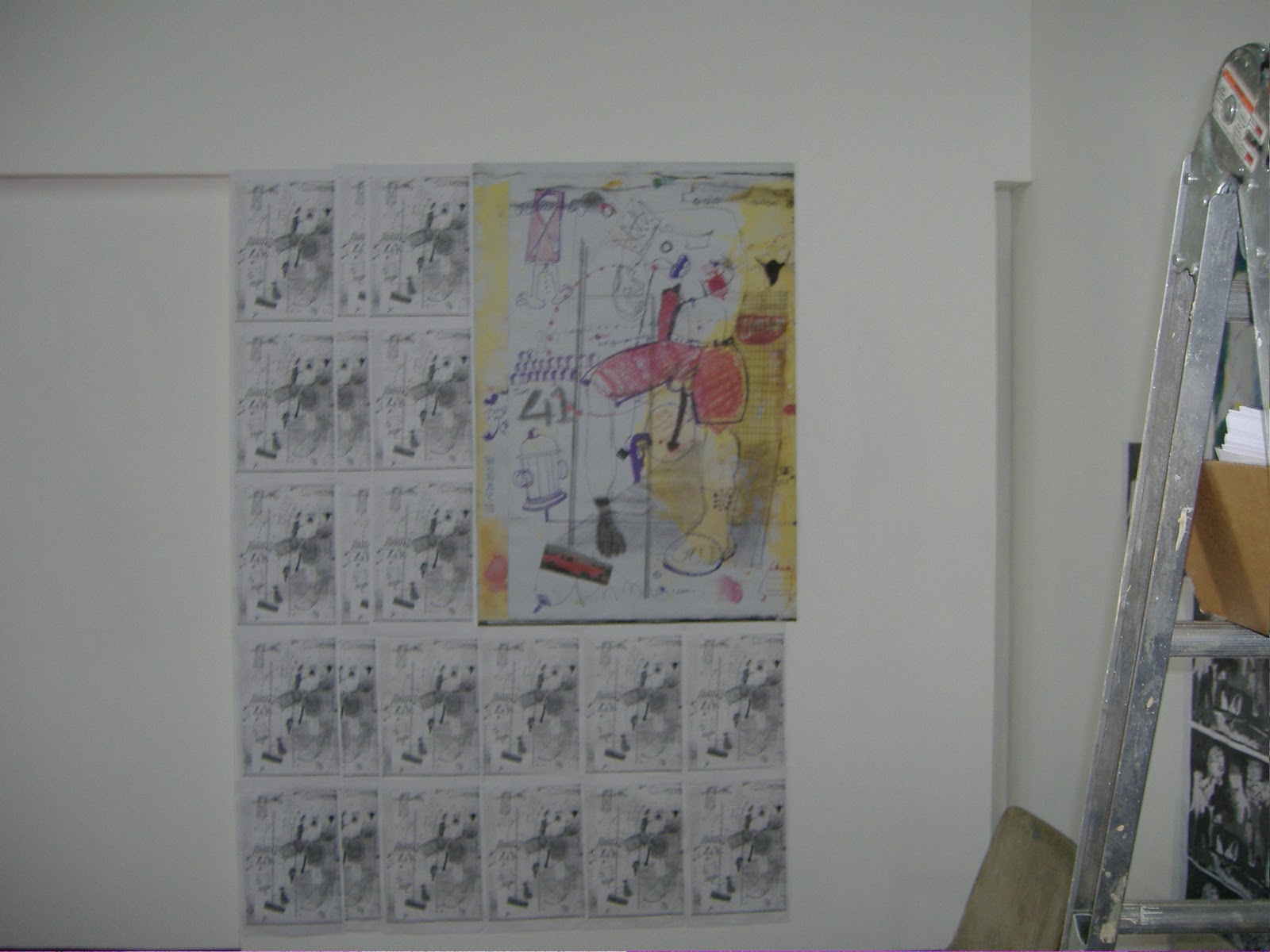
One thing that struck me, was these amazing posters, which were made during the political struggle to overthrow the regime that implemented the apartheid system.

Man they where vibrant hot and political, with serious graphic, which told the message. To now, I was looking at this capitalist agenda, the streets were filled with posters selling lifestyles most people couldn't afford, rather than empowering en mass a people who belonged together in a journey of discovery in self and in nation.

The posters where taken from my journal and transferred to PVC, by one of the new black owed printing companies that where set up through a programme to allow the flourishment of black businesses.

The cost was $1200 to print 12 PVC PRINTS at an average 109x81cm.

You think you can get that in Trinidad and Tobago?

The process mimicked the way the posters operated, from design to processing it within the printing, to the way it operated within the urban.

That was my last installation and I look forward to installing the Paint Installation Project at the National Museum and Art Gallery of Trinidad and Tobago.

I was told that October will be the month.

Lets see how this works out. That why Buy One Get One Free, must be seen in context to the body of work it belongs to.


ADDED VIDEO